BATCH-7038 · filed
Puig Targets €8bn Revenue by 2032 with Vision 2032 Plan
Puig unveiled 'Vision 2032' in Madrid on 28 October, targeting €8bn-plus revenues, a top-four premium beauty spot and full ownership of Isdin by Q1 2027.
By Rebecca Stone · · 4 min read · 741 words
Composition
- Puig targets €8bn-plus annual net revenues and a top-four premium beauty ranking by 2032.
- The Isdin acquisition (~€650m 2025 revenues) is expected to close in Q1 2027, subject to approvals.
- Charlotte Tilbury's business is to be multiplied by 1.5 by 2032; Uriage sales are to double.
- Puig's travel retail fragrance market share rose from 9.6% to 13.0% between 2021 and now.
- Adjusted EBITDA margin target is above 22.5% under Vision 2032.
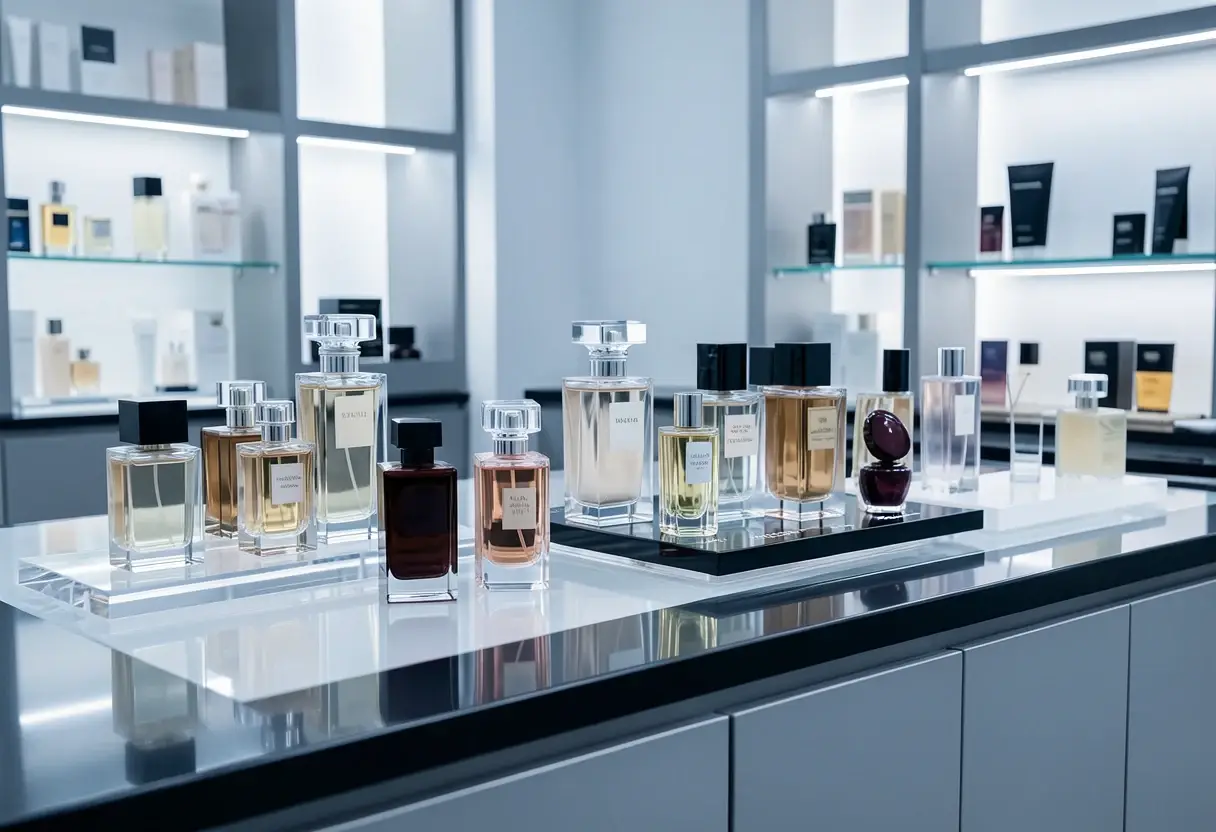
Puig has set a target of exceeding €8bn in annual net revenues by 2032, a goal CEO Jose Manuel Albesa unveiled at the company's Capital Markets Day 2026 in Madrid on 28 October. The 'Vision 2032' plan also commits the Spanish group to a top-four position in premium beauty, a top-two spot in fragrances, and an adjusted EBITDA margin above 22.5%.
"'Vision 2032' is our plan to scale what works, profitably," said Albesa. He said Puig expects to deliver the ambition primarily through organic growth, reinforcing the core portfolio, scaling its strongest brands, and concentrating resources on the categories, markets and channels where the company has the clearest opportunity to win.
The plan rests on a credible base. Puig calls itself the fastest-growing multi-brand premium beauty company of the past five years, and it passed €5bn in net revenues in 2025 — more than tripling revenue over five years, according to Executive Chairman Marc Puig. "Puig enters this next chapter from a position of strength," he said, adding that the company is stronger than at any point in its over 110-year history.
How does Puig plan to grow the portfolio?
Vision 2032 rests on four pillars: prestige fragrances, niche fragrances, dermocosmetics and make-up brand Charlotte Tilbury.
In prestige fragrances, the clearest gap is feminine perfumery. Feminine scents represent roughly 65% of the global prestige fragrance market but only about 45% of Puig's prestige fragrance business. Puig will develop Carolina Herrera as a two-axis brand, growing perfume while building its make-up credentials. Rabanne and Jean Paul Gaultier will expand through what the company statement called "disruptive innovation and culturally relevant global activation."
Niche fragrances remain Puig's fastest-growing division. The company will scale Byredo and Penhaligon's through higher productivity in existing footprints and selective expansion, particularly in the US and Asia, while, in the company's words, "preserving exclusivity and profitability."
Charlotte Tilbury, acquired in 2020, has more than tripled in size under Puig ownership. The plan calls for multiplying the brand's business by 1.5 by 2032 via make-up growth, an accelerated push in skin care, fragrance innovation in 2028 and selective distribution expansion.
What does the Isdin deal change for dermocosmetics?
The most concrete move is dermocosmetics. Puig has agreed a deal with Corporación Químico-Farmacéutica Esteve to take full ownership of skin care brand Isdin, which generated approximately €650m in revenues in 2025. Completion is expected in Q1 2027, subject to regulatory approvals.
Once closed, Isdin, Uriage and Greek natural skin and hair care brand Apivita will form a dermocosmetics platform with more than €1bn in pro forma net revenues. Puig also aims to double Uriage's sales by 2032 through category, geographic, e-commerce and channel expansion.
Which white spaces carry the €8bn goal?
Puig has identified six whitespace opportunities at what it calls the intersection of brand and market priorities:
- Digital — stronger omnichannel and pure-player partnerships, plus selective expansion across marketplaces, social commerce and Puig's own e-commerce.
- Asia-Pacific — niche fragrances and Charlotte Tilbury in North East Asia; prestige fragrances and dermocosmetics across South East Asia, India and Oceania.
- US niche fragrances — selective expansion of Byredo and Penhaligon's in a market that represents 25% of the global niche segment.
- Feminine prestige fragrances — building on Good Girl, La Bomba and the 2026 launch of Jean Paul Gaultier's La Favorite, with further innovation at Charlotte Tilbury and Rabanne.
- Charlotte Tilbury distribution — selective expansion into new markets while protecting distribution quality and brand equity.
- Dermocosmetics — pushing the dermo brands into specialist beauty, department stores, travel retail and digital platforms.
Regionally, Puig will reinforce EMEA, LATAM and travel retail while unlocking North America and APAC. The travel retail record is the standout: since 2021, Puig has climbed from the sixth to the third-largest fragrance player there, lifting market share from 9.6% to 13.0%.
An integrated operating model built around global brands, markets and functions is meant to, in the company's words, "accelerate profitable growth and capture the benefits of scale while preserving creative autonomy." Marc Puig framed the plan as organic growth from the existing portfolio, complemented by selective acquisitions that add brands, capabilities or category exposure.
The next data point to watch: regulatory clearance of the Isdin transaction, expected to close in Q1 2027 and to define whether the dermocosmetics pillar clears the €1bn mark on schedule.
via puigcmd2026.com (Original)
More from Rebecca Stone
Show full bio
Staff writer covering people, launches and day-to-day practice in professional skincare and cosmetics industry at INCI File.
120 articles
Cross-references · Related articles
- Ulta Beauty promotes Kristin Wolf to Chief Strategy & Growth Officer
- Argos marketplace to nearly double beauty SKU count with Medicube, Clarins, Dermalogica
- Sephora drives LVMH Q3 as fragrance division stalls at 1%
- POV Beauty closes $15m Series A to build on Sephora momentum
- 63% of consumers doubt premium beauty works better: McKinsey
End of monograph · 4 min read