BATCH-2647 · filed
Sacha Inchi Seed Processing Earns Spot on Indonesia's 117 Innovations 2025 List
An IPB University method for processing sacha inchi seeds into cosmetic ingredients earned a place on Indonesia's 117 Innovations 2025 list, moving the crop toward supply.
By Marcus Bennett · · 2 min read · 404 words
Composition
- IPB University developed a process turning sacha inchi seeds into cosmetic ingredients.
- The work appears on the 117 Indonesian Innovations 2025 list.
- The list selects roughly one hundred national innovations per year for industry visibility.
- Sacha inchi oil is already INCI-listed as Plukenetia Volubilis Seed Oil.
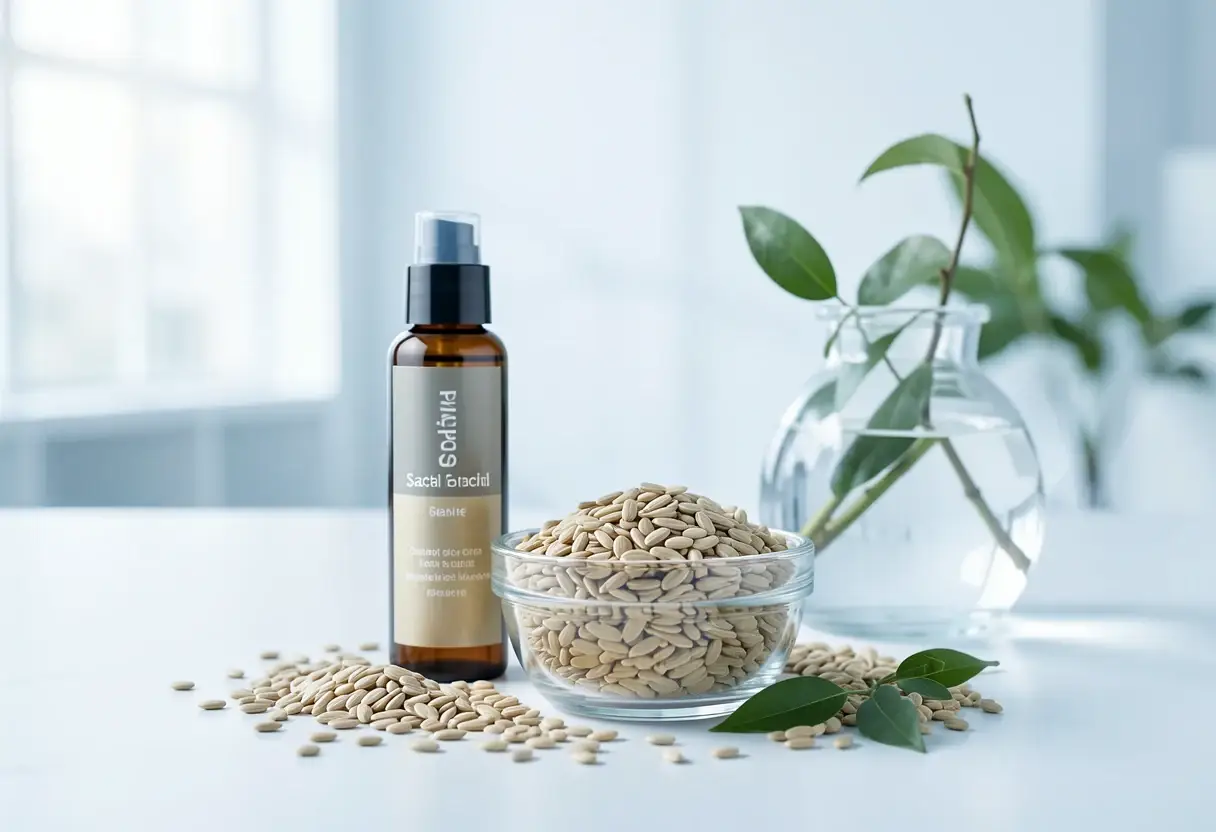
A researcher at IPB University has developed a method to process sacha inchi seeds into cosmetic ingredients, and the work now appears on Indonesia's 117 Innovations 2025 list. The list, compiled annually, selects just over one hundred innovations from across the country's research institutions, and inclusion places the project before national industry partners and policymakers.
For formulators, the significance is straightforward. Sacha inchi — Plukenetia volubilis, a seed crop native to the Amazon and now cultivated in tropical Asia — carries a fatty-acid profile heavy in omega-3 alpha-linolenic acid, omega-6 linoleic acid and tocopherols. That composition suits emollient oils, serum bases and barrier-repair formulations. IPB's contribution is the processing route: converting the seeds into workable cosmetic ingredients rather than leaving the crop as a raw agricultural export.
What does inclusion on the list mean?
The 117 Innovations 2025 list functions as a national showcase. It selects research from Indonesian universities and institutes, and inclusion signals that a technology has moved past the laboratory stage toward commercial readiness. For IPB's sacha inchi work, that means:
- National visibility among cosmetics manufacturers and ingredient buyers
- A route to partnerships with formulators seeking plant-based, traceable supply
- Support for Indonesia's push to add value to its own agricultural feedstocks
The mechanism matters for procurement teams. When a public university licenses or scales such a process, buyers gain a domestic supplier with documented provenance, which shortens the audit trail compared with imported oils.
Why sacha inchi fits cosmetic development
Sacha inchi seed oil already circulates in the global INCI system as Plukenetia Volubilis Seed Oil, so formulators face no new-name registration burden. The oil's unsaturated fatty acids support claims around skin conditioning and barrier support, while its tocopherol content contributes oxidative stability relative to other plant oils — though formulators still need antioxidant systems in finished products.
IPB's processing work addresses the step between harvest and INCI-listed ingredient: extraction, refining and standardisation at a quality cosmetic manufacturers can specify in a purchase order. That is the gap that often blocks novel botanicals from reaching production scale.
What comes next?
The development to watch is commercialisation: which Indonesian manufacturer licenses the process, at what scale, and whether the resulting ingredient enters supplier catalogues with a standardised specification sheet. Until those data points appear, the 117 Innovations 2025 listing marks the project as one step from laboratory to ingredient shelf.
via Google News - Cosmetic Ingredient (Source)
More from Marcus Bennett
Show full bio
Correspondent covering companies, deals and strategy in professional skincare and cosmetics industry at INCI File.
133 articles
Cross-references · Related articles
- Estonian startup ÄIO brings fermentation-derived oils to cosmetics with tilk! launch
- Houttuynia cordata essential oil cosmetics study lands in Nature
- C16 Biosciences builds palm-free beauty toolkit with biotech trio
- Biotech and Waste Feedstocks Redefine Circular Cosmetic Ingredients
- Mass Balance Under Scrutiny: BASF, RSPO Defend Verified Sourcing
End of monograph · 2 min read