BATCH-6631 · filed
Personal Care Still Carries Toxic Chemicals As Oversight Stays Thin
Health Policy Watch's coverage reframes the long-running cosmetics safety debate, flagging that toxic chemicals remain abundant in personal care while regulatory oversight stays thin.
By Sophie Lindqvist · · 3 min read · 586 words
Composition
- Health Policy Watch published coverage titled 'Toxic Chemicals Abundant In Cosmetics, Hair Products, With Little Regulation.'
- The coverage frames cosmetics and hair products as primary vectors for chemical exposure with little formal regulatory disclosure.
- National cosmetics frameworks typically restrict a narrow band of substances, leaving most of the substance universe without pre-market review.
- Procurement teams have absorbed a regulatory function, maintaining internal restricted-substance lists and requiring supplier conformity declarations.
- The next milestone to watch: any regulatory filing or restriction list update from a major market that codifies chemicals currently in voluntary-restriction limbo.
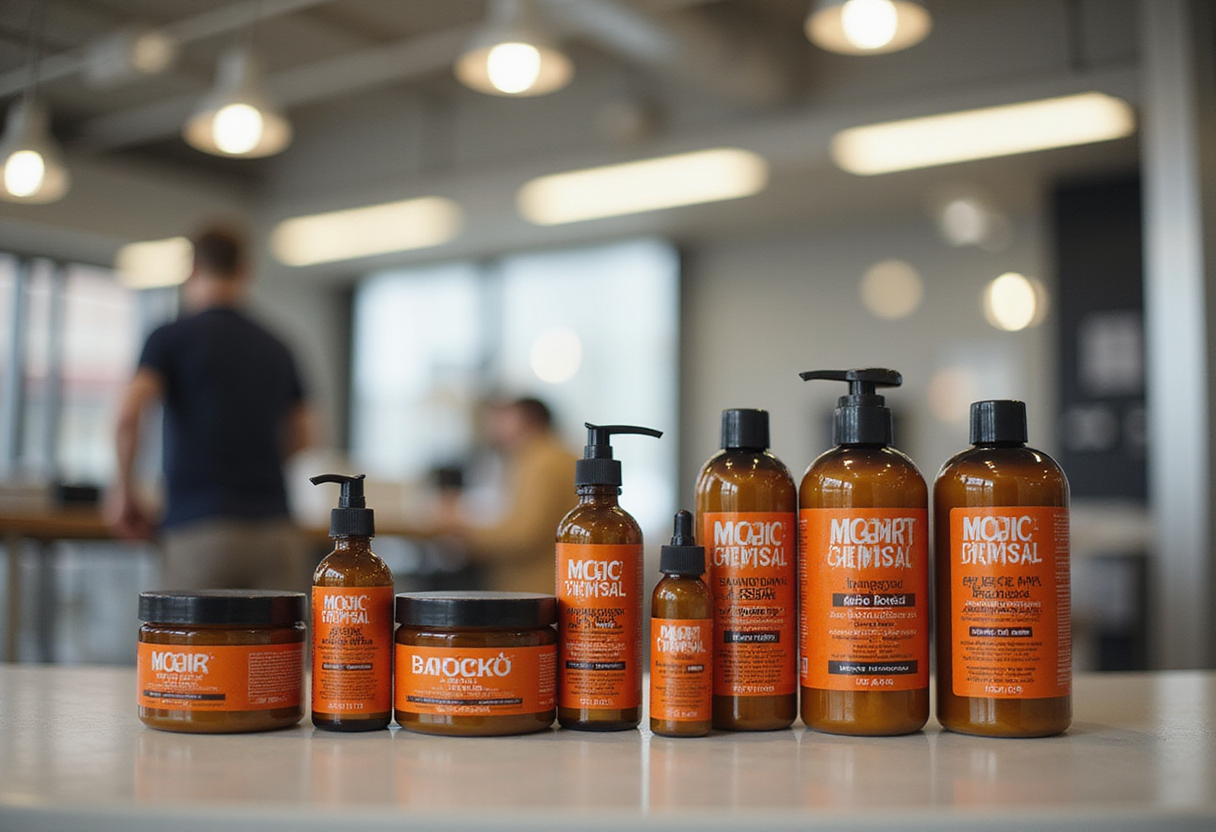
Health Policy Watch reframes the cosmetics safety debate, putting the screening workload back on industry
Health Policy Watch's coverage "Toxic Chemicals Abundant In Cosmetics, Hair Products, With Little Regulation" lays out a stark framing: finished personal-care products reach consumers carrying chemical loads that, in many jurisdictions, lack explicit pre-market authorization. The piece reopens a long-running trade discussion about who carries the screening workload when regulators do not.
What does the framing change for formulators?
For formulators, the coverage is a reminder that finished products carry cumulative chemical load across multiple ingredient systems acting in combination. Surfactants, preservatives, fragrance, colorants, UV filters, and conditioning polymers each contribute independently. The exposure profile of the end product rarely maps cleanly onto single-ingredient safety dossiers.
R&D teams working on leave-on formats — conditioners, hair masks, styling creams, skin serums — face the sharpest version of the question. Leave-on formats extend skin-contact time and reduce the wash-off dilution that historically justified weaker scrutiny of rinse-off chemistry.
The implication for product development is direct: safety dossiers must keep pace with end-product exposure, not just single-ingredient profiles. Brands sourcing commodity ingredients from multi-tier supply chains must increasingly verify absence rather than rely on regulatory permission as proof of safety.
Why does this hit compliance hardest?
Compliance teams operate under asymmetric rules. National cosmetics frameworks typically restrict a narrow band of substances; the broader substance universe goes without pre-market review.
The workload redistribution looks like this in practice:
- Internal toxicology screens incoming raw materials against expanded blacklists
- Brand safety teams maintain substance-by-substance dossiers
- Regulatory affairs tracks divergent national and regional lists across major markets
- Sustainability and ESG teams layer retailer-specific restricted-substance requirements on top
Each layer adds work that, under tighter regulation, a national authority would perform.
Where does exposure concentrate?
Hair products consistently surface as a higher-exposure category in coverage of this kind. Oxidative dye intermediates, thioglycolate-based relaxers, strong-alkali straighteners, and styling polymer systems all carry substance profiles warranting specific screening rather than generic safety assumptions.
Fragrance — a single INCI designation that can hide dozens of individual allergens and sensitizers — remains one of the least transparent inputs in the formulation chain. Preservative systems, especially formaldehyde-releasing chemistries, surface repeatedly in toxicology literature for sensitization and contact-dermatitis outcomes.
What does procurement need to do?
Procurement increasingly maintains its own restricted-substance lists and requires supplier declarations of conformity to each. Retailer programs and brand-mandated clean-beauty standards now set de facto ceilings in many markets.
The Health Policy Watch framing reinforces that procurement has absorbed a regulatory function. Without those internal screens, products on shelves would carry wider chemical diversity than today's voluntary-restriction regime allows.
Upstream, this means suppliers face longer ingredient questionnaires, more third-party audit cycles, and pressure to disclose impurity profiles rather than just the headline INCI declaration. Smaller contract manufacturers without the documentation infrastructure get squeezed out of retailer-approved vendor lists.
What's the next data point to watch?
Watch for follow-up coverage naming specific substances, concentrations, product categories, or jurisdictions with quantitative exposure data. The next milestone to track: any regulatory filing or restriction list update from a major market that codifies chemicals currently sitting in voluntary-restriction limbo. Until that arrives, the trade takeaway holds — cosmetic oversight in many major markets remains light, and formulators, compliance leads, and procurement professionals continue to do the substance-by-substance work regulators leave to industry.
via Google News - Cosmetics Regulation (Source)
More from Sophie Lindqvist
Show full bio
Market editor covering marketplaces and e-commerce at INCI File.
78 articles
Cross-references · Related articles
- June in review: FDA sunscreen approval, Omnibus VI, animal testing phase-out
- EU Tightens Chemical and Cosmetics Safety Rules
- PFAS in Cosmetics: The Compliance Question Formulators Can No Longer Avoid
- US states push against toxic cosmetic chemicals as federal laws fall short
- In-cosmetics Global 2026: early signals on ingredient direction
End of monograph · 3 min read