BATCH-8085 · filed
L'Oréal Anchors 50% Emissions Cut to SBTi 1.5°C Pathway
L'Oréal's SBTi-validated 50% absolute emissions cut by 2030 reshapes supplier scorecards, packaging specifications and contract-manufacturer audits across the cosmetics value chain.
By James Calloway · · 4 min read · 732 words
Composition
- 50% absolute reduction in Scope 1, 2 and 3 GHG emissions by 2030 against a 2019 baseline, validated by SBTi under its 1.5°C pathway in 2023
- L'Oréal posted €41.18 billion in 2024 sales, up 5.1% like-for-like
- Operations have run on 100% renewable electricity across all sites since 2022
- Contract manufacturers serving L'Oréal sites must transition to renewable-power contracts by 2025
- Next milestone: 2025 Universal Registration Document, due March 2026, will disclose glide-trajectory compliance
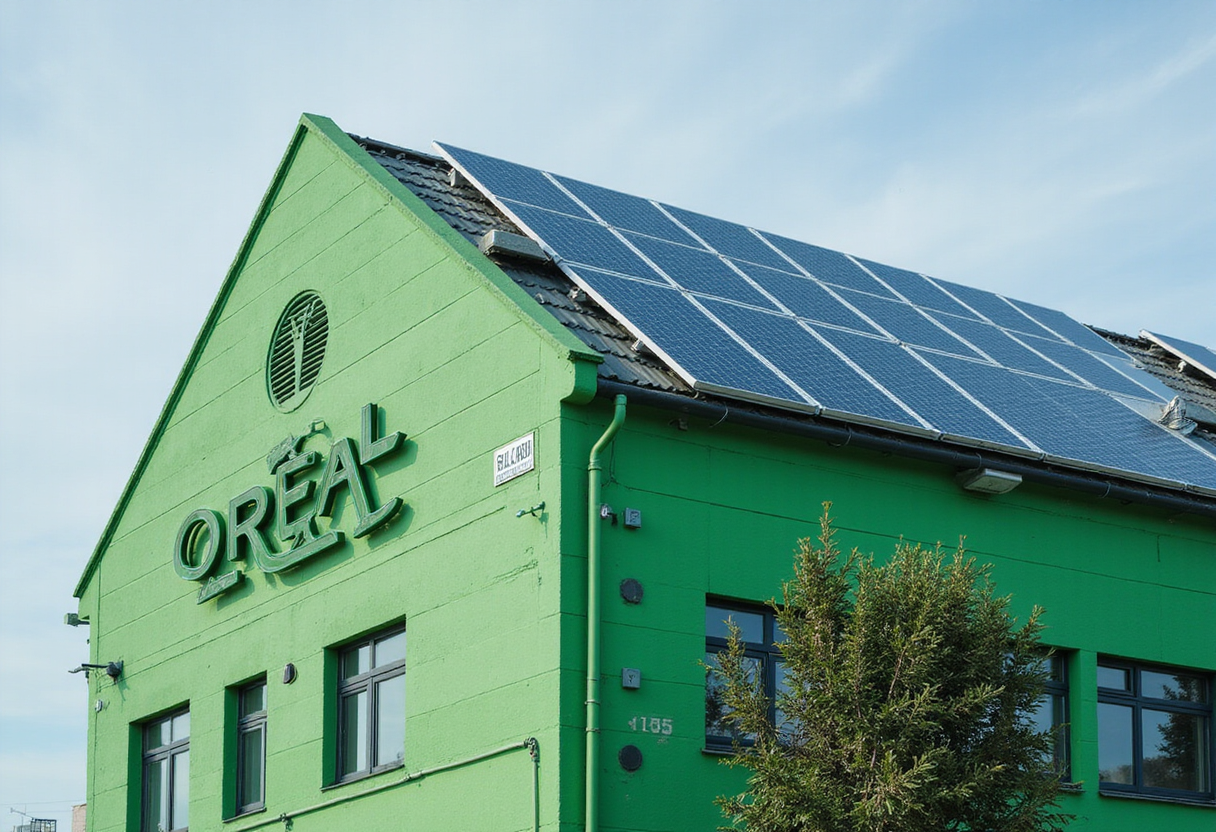
L'Oréal has anchored its decarbonisation programme to a Science Based Targets initiative-validated reduction of 50% in absolute Scope 1, 2 and 3 emissions by 2030, measured against a 2019 baseline. The commitment sits under the SBTi 1.5°C pathway. It shapes every supplier scorecard, packaging specification and contract-manufacturer audit the group runs across its 36-brand portfolio.
The figure sits at the centre of the "L'Oréal for the Future" sustainability roadmap launched in June 2020. SBTi re-validated the targets in 2023 under its 1.5°C pathway. A Sustainability Magazine feature on the group's climate strategy frames the work as integrating emissions cuts into growth rather than subordinating one to the other.
L'Oréal posted consolidated 2024 sales of €41.18 billion, up 5.1% on a like-for-like basis. Operations have run on 100% renewable electricity across all sites from 2022 onwards, according to the group's public disclosures. The harder residual sits in Scope 3: the upstream chemicals, packaging and contract-manufacturing footprint, plus the downstream consumer-use and end-of-life phase of rinse-off formats.
Three operational consequences follow for formulators, packaging engineers and procurement leads serving the wider industry:
- Supplier carbon data: chemical and ingredient suppliers must deliver product-level carbon footprints on request, aligned with ISO 14067 or equivalent sector frameworks such as Catena-X.
- Packaging redesign: primary, secondary and transit packs must shift to mono-material, recycled-content or refill architectures that downstream recyclers can actually process.
- Energy supply: contract manufacturers serving L'Oréal production sites must transition to renewable-power contracts by 2025 to stay inside the validated trajectory.
What does SBTi validation change operationally?
The 2023 validation moved L'Oréal from voluntary disclosure to an externally audited glide path. Annual reporting now reconciles against an absolute cap on tonnes of CO₂e, not an intensity ratio. A roughly 7% annualised cut across Scope 3 cannot be absorbed by energy efficiency at owned sites once the 2019 baseline is fixed.
Suppliers should expect carbon-data requests to become a standard line in requests for proposals from 2025 onwards. Contract manufacturers should prepare audited Scope 1 and Scope 2 reports aligned with the GHG Protocol, plus product-level attributions for every batch placed into L'Oréal supply chains.
Which categories carry the heaviest Scope 3 load?
Surfactants, polymers and packaging substrates dominate the upstream emissions profile in mass-market personal care. Hot-fill fragrances, aerosol formats and heavy-glass skincare lines add downstream transport and end-of-life burden. Skincare and haircare together account for the largest share of L'Oréal revenue and therefore the largest absolute emissions exposure within the group.
Independent formulators should map their own bills of materials against the same categories. A shampoo formula built on sodium lauryl sulfate, a virgin PET bottle and a bleached paperboard carton sits in a different Scope 3 band from one using bio-derived surfactants, recycled PET and FSC-certified fibre.
How should independent brands and contract manufacturers prepare?
The validation sets a benchmark that private-label producers and emerging brands will increasingly face from their retail customers, not only from L'Oréal. Mass-market retailers across Europe and North America now demand comparable Scope 3 disclosures in vendor questionnaires. A supplier unable to produce product carbon footprints by 2026 will sit outside the preferred-vendor pool for the major chains.
For smaller contract manufacturers, the practical first step is to install an internal carbon-accounting system aligned with the GHG Protocol, then push carbon-data requests upstream to chemical suppliers. Producers in jurisdictions without mandatory CSRD-style disclosure still face the data ask because their customer base demands it.
What is the next data point to watch?
L'Oréal's 2025 Universal Registration Document, due to publish in March 2026, will disclose whether the 2024 fiscal year remained within the SBTi glide trajectory. A reading inside the 1.5°C pathway would reinforce the group's claim that growth and decarbonisation are compatible at scale. A deviation above the band would trigger a board-level remediation plan and intensify supplier engagement across the value chain.
Watch also for SBTi's sector-specific guidance updates for chemicals and plastics, expected through 2025. Those updates will tighten the absolute cap for ingredient and packaging suppliers in the personal-care chain and force a fresh round of supplier scorecard revisions.
via Google News - Cosmetics Sustainability (Source)
More from James Calloway
Cross-references · Related articles
- L'Oréal opens second sustainability cohort of L'AcceleratOR Programme
- L'Oréal: 67% of Formula Ingredients Now Natural or Recycled
- Fortune puts L'Oréal at center of beauty's sustainability fight
- L'Oréal Names First Cohort for Sustainable Innovation Program
- L'Oréal targets last-mile refill to scale sustainable beauty
End of monograph · 4 min read