BATCH-9042 · filed
FDA Approves Bemotrizinol, Adding a New Sunscreen Active to the US Toolkit
The US FDA has approved bemotrizinol as a new OTC sunscreen active ingredient, per CIRS Group. The clearance ends a multi-decade drought in the US filter catalogue and unlocks reformulation paths across R&D, compliance and procurement.
By Rebecca Stone · · 3 min read · 571 words
Composition
- FDA approved bemotrizinol as a new over-the-counter sunscreen active ingredient, per regulatory consultancy CIRS Group.
- Bemotrizinol is sold internationally as Tinosorb M, a brand marketed by BASF in Europe, Asia and Oceania.
- The US OTC sunscreen monograph is codified at 21 CFR Part 352.
- New US chemical UV filters generally require a Time and Extent Application or a formal monograph amendment.
- Filters widely used abroad, including Tinosorb S, Mexoryl SX, Mexoryl XL, Uvinul A Plus and Uvinul T 150, have queued at the FDA for years.
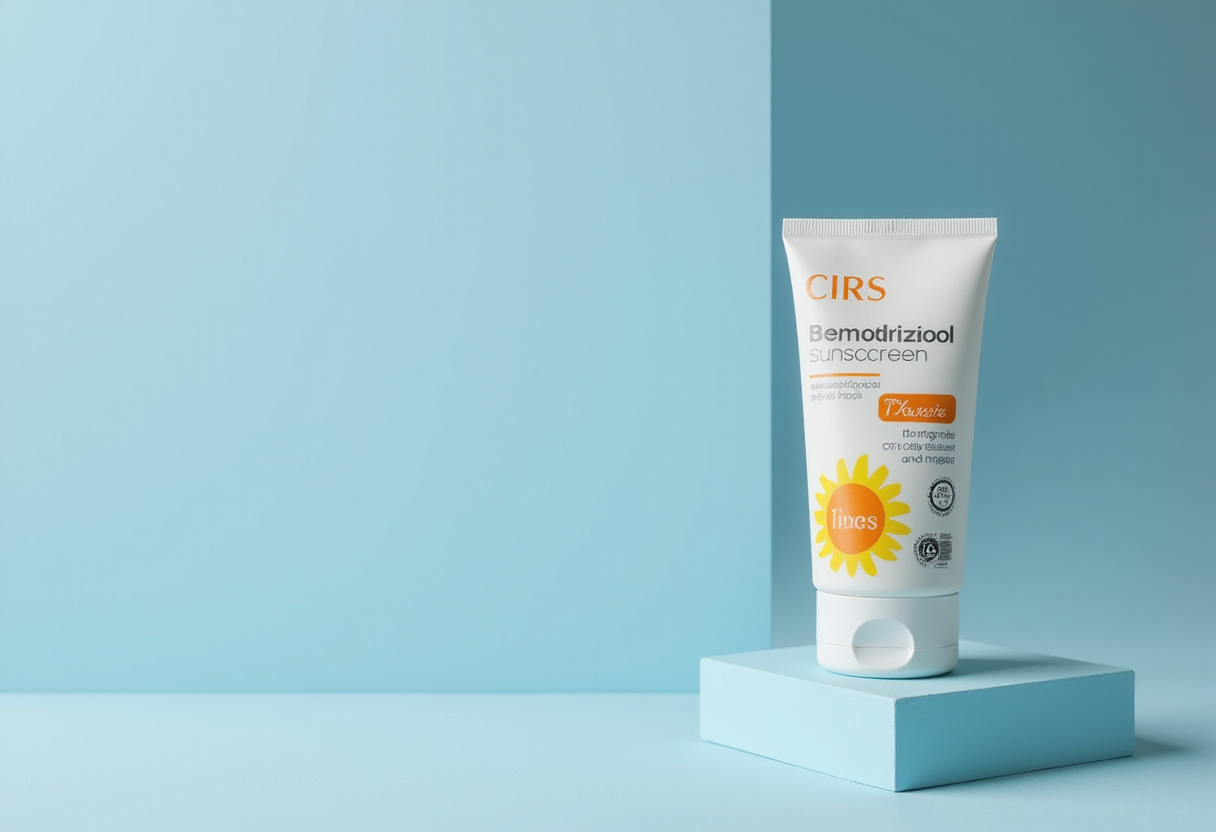
The US Food and Drug Administration has approved bemotrizinol as a new over-the-counter sunscreen active ingredient, ending a multi-decade drought in the US sunscreen filter catalogue and giving US formulators another modern UV filter option.
The decision, reported by regulatory consultancy CIRS Group, marks one of the rare additions to the OTC sunscreen monograph's permitted active list. For more than two decades, US-based formulators have worked from a limited palette of older organic UV filters. Several of those filters carry concentration caps or stability issues that complicate broad-spectrum, photostable claims. Bemotrizinol's clearance shifts that calculus, but downstream work runs through R&D pipelines, compliance dossiers and procurement contracts.
What is bemotrizinol?
Bemotrizinol is a broad-spectrum UVA–UVB absorber sold internationally as Tinosorb M, a brand BASF markets in Europe, Asia and Oceania. The molecule, a bis-benzotriazolyl tetramethylbutylphenol, delivers photostable absorption into the longer UVA range.
That is the band of UV coverage US formulators historically assemble from avobenzone, octocrylene and assorted stabilizers. The clearance lifts part of that formulation complexity on paper.
Brands still owe fresh stability, packaging-interaction and Drug Facts work before a bemotrizinol-containing SKU reaches US retail. The FDA still has to publish the monograph language, use concentrations and approved combinations that turn a clearance letter into a runnable formula.
Why the US filter list has stayed short
The United States remains the only major cosmetics market working under the OTC sunscreen monograph, codified at 21 CFR Part 352. Under that framework, a new chemical UV filter generally requires a Time and Extent Application or a formal monograph amendment.
Filters sold elsewhere—Tinosorb S, Mexoryl SX, Mexoryl XL, Uvinul A Plus, Uvinul T 150—have queued at the FDA for years. Bemotrizinol's clearance is a notable data point for industry advocates pressing to widen the US filter set.
What this means for formulators
- R&D scope opens up: formulations built around older UVA actives can be reviewed against a single broad-spectrum molecule.
- Stability work resets: photostability, heat and packaging-interaction studies repeat on every reformulated SKU.
- Claims work cycles back through: SPF and UVAPF substantiation, Drug Facts panels and label artwork all need an internal refresh.
What this means for compliance
- Ingredient dossiers, safety substantiation and the FDA's Voluntary Cosmetic Regulatory Program database entry become a clean filing exercise.
- Brand owners selling bemotrizinol formulas in the EU, UK, Australia or Asia should review whether US-only formats can be consolidated, cutting dual-formula overhead.
- Regulatory teams should treat the approval as the trigger to re-validate market-specific clinical testing tied to filters the new active might displace.
What this means for procurement
- Buyers gain a credible alternate source for long-UVA performance, easing single-supplier concentration risk.
- Contract talks should anticipate reformulation credits or phase-out clauses on products built around thinner-UVA filters.
- Specifications teams should request US-grade CMC documentation, impurity profiles and shelf-life data as soon as suppliers publish them.
What to watch next
The next data points are the FDA Federal Register notice spelling out concentration limits and combination rules, the supplier's US-specific technical data sheet, and the first Drug Facts panels filed with the new active.
Brand owners already selling bemotrizinol-containing SKUs abroad will move first; US-only competitors typically trail by one or two quarters once dosage-grade supply and finished-product data mature.
via Google News - Cosmetic Ingredient (Source)
More from Rebecca Stone
Show full bio
Staff writer covering industry trends and analytics at INCI File.
91 articles
Cross-references · Related articles
- Bemotrizinol gets FDA nod, ending 27-year sunscreen filter drought
- FDA adds new UV filter to updated sunscreen monograph
- June in review: FDA sunscreen approval, Omnibus VI, animal testing phase-out
- Formulating Forum: Climate-Adaptive SPF and Bio-Based Water Resistance
- Viablife's USDA-Certified 100% Biobased Niacinamide Wins First CBIAs
End of monograph · 3 min read