Filed
Proya Buys 51% of Flower Knows in RMB 351 Million Deal
Proya's RMB 351 million majority acquisition of Flower Knows signals C-beauty's shift from dupe culture to global expansion — color cosmetics up 5.4% while skincare slips.
By Amara Osei · · 4 min read · 894 words
Composition
- Proya acquired 51% of Flower Knows for RMB 351 million (~$52.6 million); its stock rose 5.1% on the Shanghai Stock Exchange.
- Proya targets RMB 50 billion (~$7.5 billion) in annual revenue and a top-10 global ranking by 2035, after passing RMB 10 billion in 2024.
- Color cosmetics online sales rose 5.4% to RMB 94.7 billion (Jan–Sep 2025) while skincare fell 0.8% to RMB 207.8 billion, per Moojing.
- Maogeping posted 2025 revenue of RMB 5.1 billion, up 30%, after its December 2024 HK$2.3 billion Hong Kong IPO.
- China cosmetics retail sales reached RMB 349 billion (Jan–Sep 2026), up 6.1% year-on-year, per the National Bureau of Statistics.
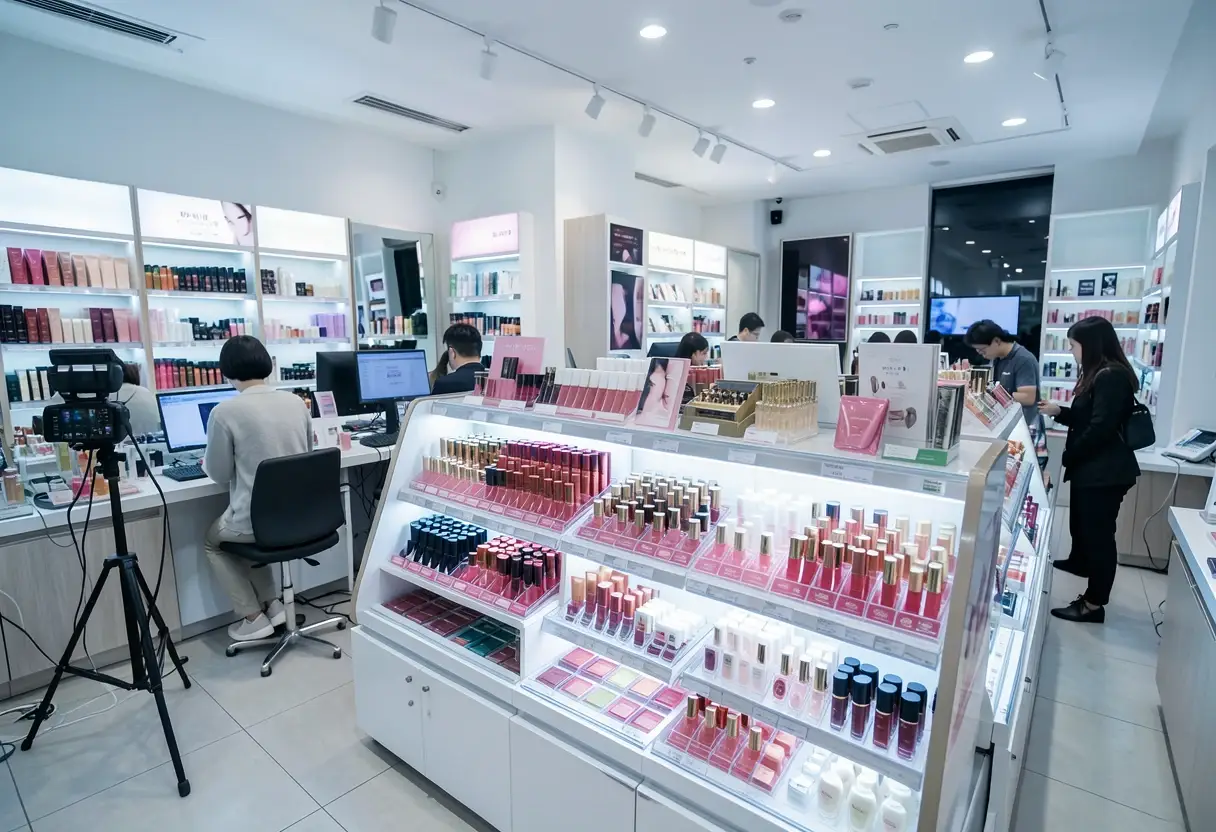
Proya Cosmetics, China's largest beauty company with more than RMB 10 billion ($1 billion) in 2024 revenue, has taken a 51% controlling stake in color brand Flower Knows for RMB 351 million (roughly $52.6 million). Its shares climbed 5.1% on the Shanghai Stock Exchange on the announcement.
The deal, completed in May after an initial investment last August, maps Proya's route to an ambitious target: RMB 50 billion ($7.5 billion) in annual revenue and a place among the world's top 10 cosmetics companies by 2035. Proya has chosen to buy rather than build, having gone public in 2017, acquired makeup brand Timage in 2019, and now added Flower Knows — a fairytale-aesthetic makeup label founded in 2016 by cosplay personalities Yang Zifeng and Zhou Tiancheng, known in China as Baozi and Hana.
What does the acquisition change for buyers and formulators?
It confirms C-beauty's pivot from online buzz toward controlled offline retail, and it puts a hard valuation on a digitally native Chinese color brand at a moment when the category data favors it. Online color cosmetics sales from January to September 2025 rose 5.4% to RMB 94.7 billion ($14.2 billion), while skincare — still the dominant category — fell 0.8% to RMB 207.8 billion ($31.2 billion), according to Beijing-based consumer intelligence platform Moojing.
"Over the past decade, we've built a distinct creative identity and a passionate community. At the same time, we recognize that the beauty market is becoming more competitive and consumers are more selective about where they spend," said Flower Knows global CMO Fang Gongyiliu. "Our ambition isn't simply to become a bigger brand, but to become a more enduring one."
A market worth RMB 349 billion in nine months
China remains the world's second-largest cosmetics consumer market. National Bureau of Statistics data shows September 2026 retail sales of cosmetics at RMB 39 billion ($5.85 billion), up 5.4% year-on-year, with January–September 2026 totaling RMB 349 billion ($20.9 billion), up 6.1% versus the same period in 2025.
Domestic players Proya, Florasis and Maogeping collectively command more than half the domestic market, according to the China Association of Fragrance, Flavor and Cosmetic Industries, alongside multinationals such as Chanel Beauty, La Mer and L'Oréal, whose mainland business returned to growth in late 2025 and carried momentum into 2026.
K-beauty tells a different story in China. Unofficial restrictions on South Korean cultural goods, in place since 2016, have cut K-beauty's Chinese market share from 66% to 20%, per 2025 Euromonitor data. Amorepacific now reports higher revenue from North America than from China. Cherrie Rao, a former marketing executive who recently relocated to the US after a decade in Beijing and Shanghai, notes that Chinese consumers "are probably not seeing all these ads on Medicube or the other dozen beauty brands that are doing very well globally."
A closed digital ecosystem
Distribution in China runs through native super-apps, not Sephora or Olive Young. Brand discovery happens on Douyin and Xiaohongshu; transactions on Taobao, Tmall, JD.com and Pinduoduo; payment through WeChat and Alipay, with cash and credit cards rarely used. Most C-beauty brands launch there. Florasis, co-founded in 2017 by Hua Mantian and Freeman Ren with TCM-infused cosmetics, bypassed brick-and-mortar for Tmall DTC. Flower Knows built its base on Taobao livestreams and ranks among top category sellers.
Maogeping took the opposite path. Founded in 2000 by the namesake makeup artist and celebrated as China's first homegrown luxury beauty brand, it broke the Western and Japanese monopoly on high-end department store counters and listed in Hong Kong in December 2024 at HK$2.3 billion (about $300 million), making its founder a billionaire. It reported 2025 revenue of RMB 5.1 billion ($757 million), up 30% year-on-year, and runs its own makeup schools across 11 Chinese cities.
Beyond the guochao halo
R&D-heavy players such as Giant Biogene and Bloomage Biotech — which backs Rao's new brand Alaris — plus collectible packaging from Florasis, Flower Knows and Perfect Diary, and viral functional products from Judydoll, Joocyee and Winona, have moved C-beauty past imitation. Linda Yu, general manager of Red Ant Asia, which advises Creed, Moncler, Charlotte Tilbury and Byredo, said Western or Korean brands "cannot keep up," but warned that "the overall guochao halo is fading" — surface-level patriotism no longer sells. Kantar BrandZ director Ellie Thorpe agrees the strongest players compete on "a clear reason to choose them."
Beauty standards are shifting too: the filtered "influencer face" (wang hong lian) ideal is giving way to natural complexions and "no makeup" makeup, driven partly by K-pop and American content on Xiaohongshu.
The next data point to watch
Offline and overseas expansion is the sector's growth engine: Florasis operates its first overseas store in Tokyo (2025) and stocks retailers in over 110 countries; Flower Knows entered Boots UK in March, Ulta US stores in September, and opened its first global flagship on Shanghai's Huaihai Middle Road in October, with the US now its largest international market. Watch whether Proya files further acquisitions against its 2035 top-10 deadline — and whether C-beauty's next category results sustain color's 5.4% growth against skincare's decline.
via vogue.com (Source)
More from Amara Osei
Show full bio
News editor covering technology and product news in professional skincare and cosmetics industry at INCI File.
151 articles
Cross-references · Related articles
End of monograph · 4 min read