BATCH-9486 · filed
Peptide hydrogel for sensitive skin moves from bench to application testing
A Nature-published study documents a peptide-enriched hydrogel for sensitive and damaged skin from design through application testing, offering formulators a full-chain benchmark.
By Amara Osei · · 3 min read · 555 words
Composition
- Nature-published study covers peptide hydrogel development from design to application testing
- Hydrogel matrix addresses peptide stability and sustained-release challenges in aqueous formulations
- Finished-formulation application data strengthens safety dossiers under EU 1223/2009 for sensitive-skin claims
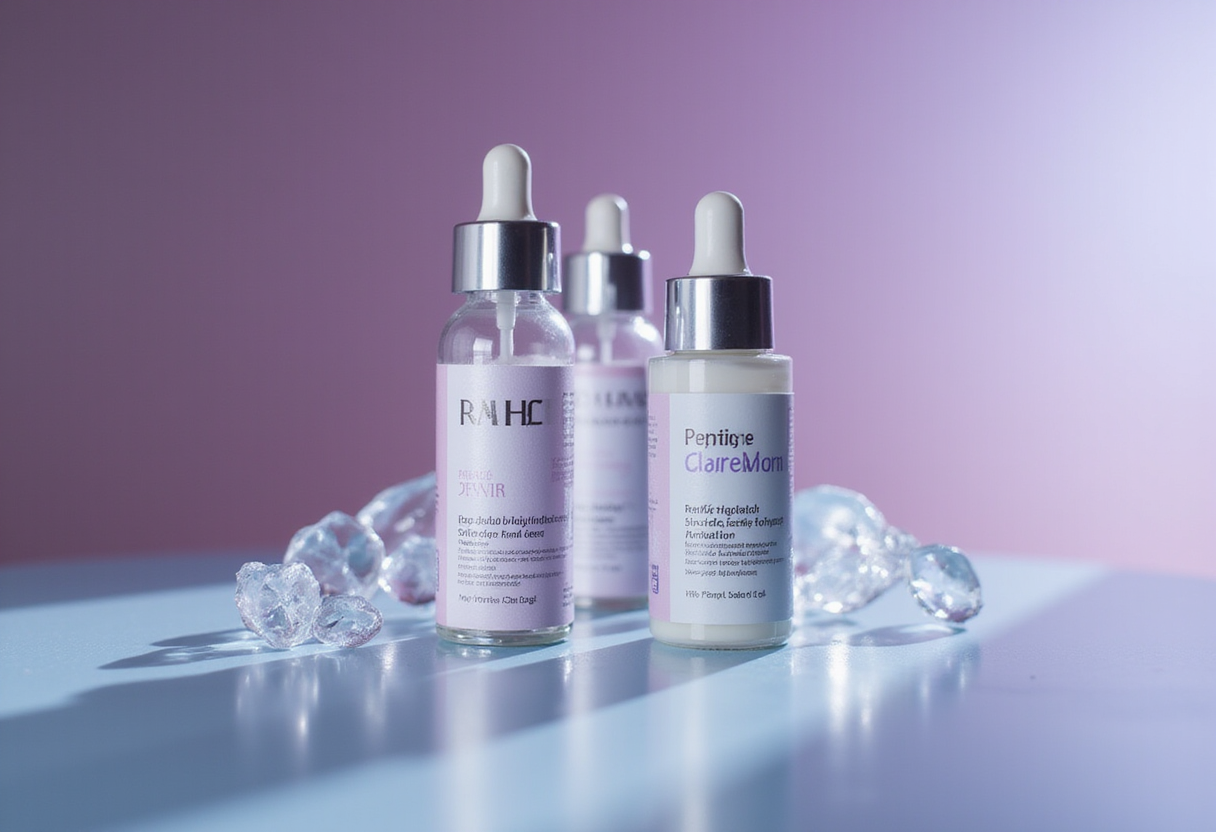
A research team has published a peptide-enriched hydrogel formulation for sensitive and damaged skin, taking the system through the complete development chain — from initial design to application testing — in a study now appearing in Nature's portfolio.
The publication matters for formulators because it documents the whole trajectory rather than a single endpoint. Most peptide delivery research stops at in vitro data. This paper follows the material from compositional design through to testing on application, which is the point where R&D claims either survive contact with real skin conditions or collapse.
Hydrogels are the delivery vehicle of choice here for a straightforward reason: sensitive and damaged skin barriers tolerate high-water-content, film-forming matrices better than occlusive lipid-heavy bases or alcohol-containing systems. Embedding peptides into such a matrix addresses the two classic problems with peptide cosmetics — stability in an aqueous phase and sustained release at the skin surface rather than a burst dose that degrades before it acts.
For product development teams, the study offers a template. Any brand building a barrier-repair or post-procedure SKU can benchmark its own prototype against a published formulation that has passed application-level testing, not just lab characterization. That benchmarking value extends to claims substantiation: when a supplier or internal team asserts that a peptide hydrogel "supports sensitive skin," a peer-reviewed dataset of this kind gives regulatory and legal reviewers a stronger anchor than in-house data alone.
The compliance angle is equally concrete. Under EU Regulation 1223/2009 and equivalent frameworks, safety dossiers for products targeting compromised or sensitive skin carry higher evidentiary expectations. Published application testing on the finished formulation — not merely the isolated active — reduces the gap between the safety file and the marketing narrative, which is where many claims notifications run into trouble.
Procurement and private-label buyers should also take note. Peptide actives command premium pricing, and suppliers frequently sell them on receptor-level mechanistic data. A formulation study that integrates the peptide into a finished hydrogel and tests it in use gives buyers a more realistic basis for comparing ingredients: performance in a vehicle, at realistic use conditions, rather than in a buffered petri dish.
For treatment menus, the format is significant. Hydrogels suit post-treatment protocols — after chemical peels, microneedling or laser sessions — where the barrier is deliberately compromised and clinicians need cooling, non-occlusive delivery. A peptide hydrogel validated through application testing fits directly into that professional channel, where purchasing decisions hinge on published tolerance data rather than consumer marketing.
The sensitive-skin segment itself continues to expand across mature markets, and damaged-barrier claims increasingly intersect with dermatological positioning. Formulators working in that space face a narrow formulation window: enough active to show efficacy, gentle enough excipients to avoid stinging on compromised skin. Studies that publish both the design rationale and the application results shorten that development loop.
What comes next is the practical question of translation. The study's formulation path — design, build, test in application — will likely inform follow-up work on specific peptide sequences, concentration optimization and longer-term tolerability data. Formulators and buyers should watch for subsequent publications detailing the peptide identity, dosing and any comparative performance against established barrier-repair actives, as those data points will determine whether this platform moves from academic validation into commercial supply.
via Google News - Cosmetic Formulation (Source)
More from Amara Osei
Cross-references · Related articles
- Peptides in skincare: efficacy claims meet formulation reality
- IMCD to showcase skincare–aesthetics crossover at in-cosmetics Global 2026
- Organogel-Based Colloidal Hydrogels Studied for Cosmetic Use
- SkinMedica Rolls Out Two Barrier-Support Products for Summer
- IMCD to debut seven post-procedure formulations at in-cos Global
End of monograph · 3 min read