BATCH-8760 · filed
Jellyfish bycatch eyed as next collagen feedstock for cosmetics
A Frontiers-published piece positions jellyfish caught as bycatch as a candidate collagen source for cosmetic and biotech applications, framing marine discards as the next marine ingredient opportunity.
By Sophie Lindqvist · · 3 min read · 676 words
Composition
- Source: Frontiers-published article framing jellyfish bycatch as a collagen feedstock
- Stated applications in the source: cosmetics and biotechnology
- Source framing: marine waste-stream valorisation rather than primary fishery target
- No commercial supplier, INCI dossier or extraction process is named in the source headline
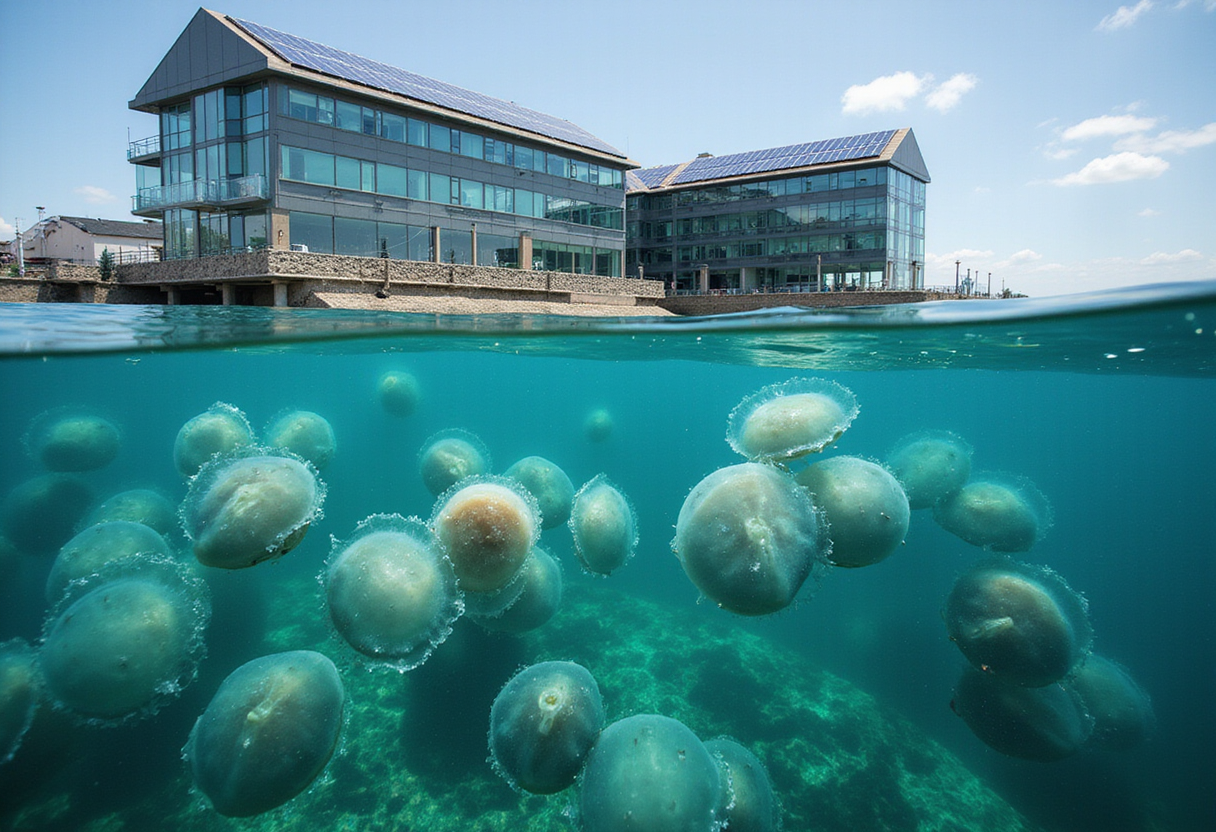
Jellyfish caught as bycatch could become a commercial collagen feedstock for cosmetics and biotechnology, according to a piece published on Frontiers that frames discarded marine biomass as a viable raw material for personal-care and life-science applications.
The article positions jellyfish as an underused reservoir of collagen with potential use in cosmetic formulations and biotech processes — a signal that academic interest in marine alternatives is extending beyond established fish-skin and scale-derived material.
What the source signals
The headline alone does not show the publication date or full author list. The framing — "bycatch" rather than "aquaculture" or "fishery target" — tells formulators and procurement teams where the economic logic sits.
Bycatch is a cost line for trawl operators. Converting that waste into a certified marine collagen ingredient would turn a disposal expense into a revenue line.
That mirrors the model behind chitosan from shellfish, alginates from brown seaweed, and astaxanthin from krill processing — each of which climbed from waste-stream curiosity to specification-grade ingredient over the last two decades.
Why the framing matters for brands
A non-mammalian, non-vertebrate collagen source opens label language that current marine and bovine offerings cannot match.
Fish-collagen suppliers have spent the last decade building the marine category. A jellyfish-derived entry would sit one rung further from terrestrial livestock.
That distinction travels well across vegan, kosher, halal and sustainability claims, where every removed vertebrate origin claim shifts the marketing ceiling.
How the marine collagen category has evolved
Marine collagen moved from niche to mainstream over roughly a decade. Iceland- and Chile-based processors pioneered the segment around cod skin, later expanding to tilapia and salmon frames. The result: a stable, certified, traceable supply of hydrolysed collagen peptides sold in cosmetic, nutraceutical and biomedical grades.
A jellyfish entry would test whether the category can extend beyond vertebrate fish into invertebrate marine species — a step with its own allergenic and regulatory unknowns but with lower religious-certification friction than any fish-skin source.
Where biotech crossover happens first
The biotech side of the article's framing matters as much as cosmetics. Collagen scaffolds for tissue engineering, 3D-bioprinted skin models, and wound-dressing substrates all consume specification-grade collagen. Marine sources, including jellyfish, have appeared in academic scaffolds for years.
A commercial jellyfish-collagen pipeline would let biotech buyers diversify away from the handful of suppliers that dominate biomedical-grade porcine and bovine collagen — and would do so without the BSE dossier headache that still shadows terrestrial sources in some regulatory jurisdictions.
What the supply chain still has to prove
Even with a favourable academic framing, three commercial questions remain open:
- Whether any processor can deliver tonne-scale extraction with consistent molecular weight
- Whether jellyfish populations can be harvested at a steady cadence without becoming a primary fishery target
- Whether the cost per kilogram of hydrolysed jellyfish collagen clears the price bar set by fish-skin grades
The Frontiers article does not answer any of these. They will land in subsequent technical papers, supplier filings, or trade-press coverage when a named extraction partner emerges.
What it means for compliance and product development
If jellyfish collagen reaches a commercial specification, the first dossiers will most likely target topical skin-care lines — serums, masks, eye treatments — where the marine-collagen premium is already accepted.
Biotech and tissue-engineering applications would follow, given the overlap between cosmetic-grade and biomedical-grade specifications.
The regulatory pathway will track the route marine-collagen suppliers have already walked: Novel Food or cosmetic-grade registration in the EU, GRAS assessment in the US, and INCI listing once a supplier commits to a commercial specification. None of those steps appear in the source, but they set the timeline any serious commercialisation effort must clear.
What to watch next
The next data point is whether any marine-biotech group files a process patent, a regulatory dossier, or a named-supplier INCI entry for jellyfish-derived material. Until then, the research sits as a directional signal for procurement and R&D teams tracking the marine ingredient pipeline.
via Google News - Cosmetics Sustainability (Source)
More from Sophie Lindqvist
Show full bio
Market editor covering marketplaces and e-commerce at INCI File.
78 articles
Cross-references · Related articles
- Greece opens inquiry into invasive fish as cosmetic feedstock
- Algiecel expands microalgae output as fish oil squeeze reshapes cosmetic sourcing
- Biotech and Waste Feedstocks Redefine Circular Cosmetic Ingredients
- Korea launches task force to defend K-beauty exports against Islamic-law rules
- Carrageenans re-emerge as multifunctional cosmetic formulation tools
End of monograph · 3 min read