BATCH-5634 · filed
Azeco Cosmeceuticals to showcase 99%-purity Azepur99 at NYSCC 2026
Azeco Cosmeceuticals will showcase Azepur99, a ≥99% purity azelaic acid active derived from sunflower oil, at NYSCC Suppliers' Day 2026 booth 1858. Use levels span 5–15% across serums, gels, lotions and shampoos.
By Sophie Lindqvist · · 3 min read · 623 words
Composition
- Azeco Cosmeceuticals B.V. will present Azepur99 at NYSCC Suppliers' Day 2026 booth 1858 (announcement dated 5 May 2026)
- Azepur99 is specified at ≥99% purity and is derived from high oleic sunflower oil
- Recommended use levels run between 5% and 15% across serums, gels, lotions and shampoos
- Documented formulation targets: acne-prone skin, redness-prone skin, uneven tone and scalp balance
- Azeco Cosmeceuticals was founded in 2014 as a dedicated azelaic acid supplier to the cosmetics industry
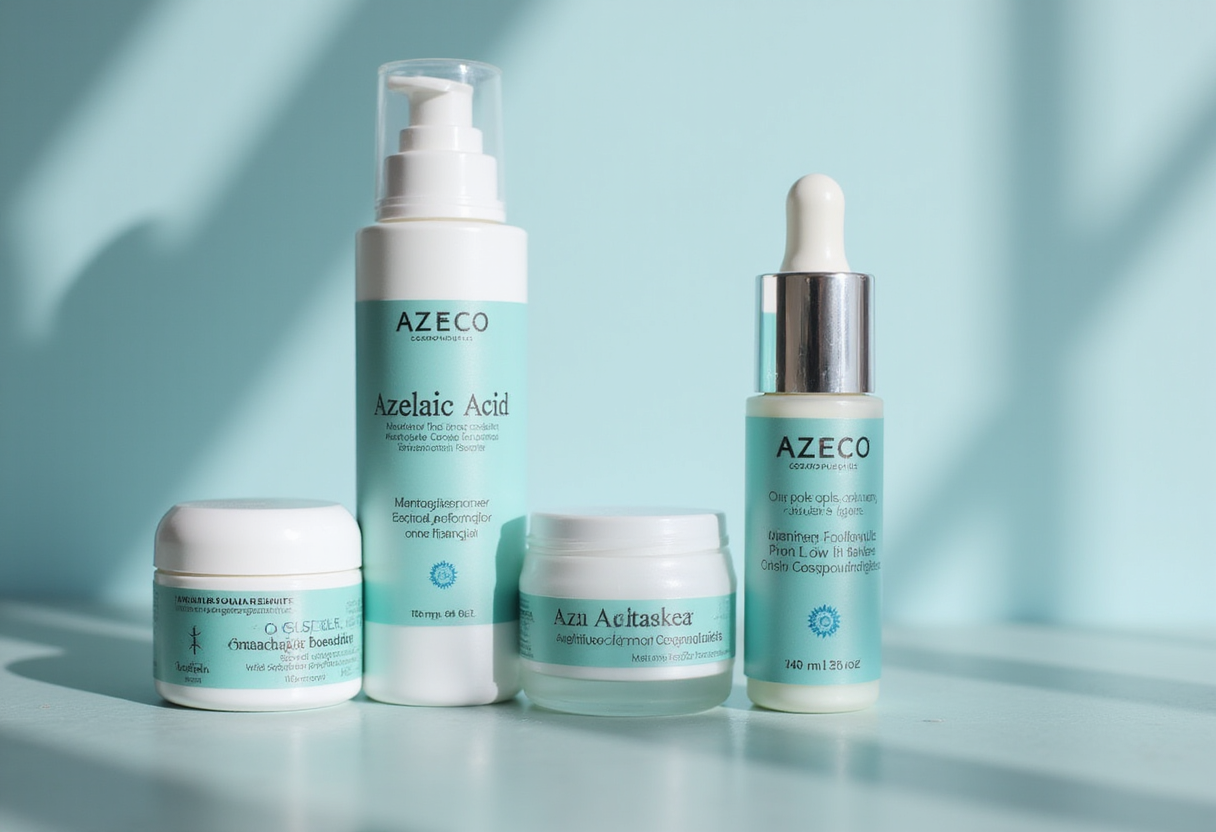
Azeco Cosmeceuticals B.V. will showcase Azepur99, an azelaic acid (INCI: Azelaic Acid) graded at ≥99% purity, at NYSCC Suppliers' Day 2026 from booth 1858. The Dutch supplier confirmed the appearance on 5 May 2026.
Azeco describes Azepur99 as "the highest grade azelaic acid for skin and haircare, characterised by a purity equal or exceeding 99%." The single-ingredient focus has defined the company since its 2014 founding, with batch-to-batch consistency pitched as the core differentiator versus multi-active catalogues.
What does Azepur99 deliver to a formulator?
The material carries a purity specification equal to or exceeding 99%. The feedstock is high oleic sunflower oil, marketed as naturally derived. Azeco ships Azepur99 as a micronised, free-flowing powder. The physical form lets formulators dose it directly into:
- Serums and gels
- Lotions and creams
- Shampoos and scalp treatments
Typical use levels sit between 5% and 15%. That window covers two distinct formulation patterns. The lower end supports daily-use blemish and tone serums that sit comfortably under common regulatory thresholds. The upper end approaches the leave-on concentration band historically associated with dermatological reference products and may shift product classification in certain markets.
Azeco highlights four formulation targets: acne-prone skin, redness-prone skin, uneven tone, and scalp balance. Each maps to one or more of azelaic acid's documented actions: antimicrobial, anti-inflammatory and skin-renewing. The supplier's specialist positioning means R&D teams using Azepur99 receive a narrower, focused technical dossier than buyers would get from a multi-active catalogue supplier.
Why does the 99% specification matter?
Azelaic acid's efficacy in acne-prone, redness-prone and uneven-tone skin ties to its dicarboxylic acid chemistry. Impurity loads can shift colour, introduce odour and erode oxidative stability. A tighter purity ceiling gives procurement and QA teams a cleaner Certificate of Analysis to defend during stability work and batch release.
The sunflower-derived feedstock also answers procurement briefs that ask for plant-origin cosmetic actives with traceable upstream supply. That fits the natural-origin positioning requested by brands marketing under clean or sustainable claims.
Where does scalp care fit?
The supplier lists scalp balance among Azepur99's technical targets. That puts the active in the same indication space as anti-dandruff and sensitive-scalp claims. The 5–15% dosing window translates to a leave-on scalp serum or a rinse-off shampoo carry-through. Formulators working in the scalp space should benchmark cost-in-use against incumbent anti-dandruff actives and weigh leave-on versus rinse-off performance trade-offs.
How does this fit the broader azelaic acid market?
Azelaic acid migrated from Rx dermatology into OTC and prestige skin care over the past decade. Recent launches have used it in blemish serums, redness correctors and tone-evening treatments. The combination of high purity, a plant-derived feedstock and a flexible 5–15% use window gives brand owners room to position Azepur99 as a hero claim or as a supporting active in a multi-ingredient formula.
The data point to watch: published stability panel results across the 5–15% use range and full impurity profiling versus competitive azelaic acid grades. Neither has been disclosed for Azepur99 to date.
What should buyers and R&D teams ask at the show?
Visitors to booth 1858 should request:
- Full Certificate of Analysis including residual solvent profile
- Particle size distribution and micronisation data
- Accelerated and long-term stability data at 5%, 10% and 15%
- Natural-origin certification documentation
- Compatibility data with actives commonly paired with azelaic acid
The next checkpoint is NYSCC Suppliers' Day 2026 itself. After that, watch for branded launches referencing Azepur99 by name, which will signal whether Azeco's narrow-focus strategy is converting from supplier pitch to on-shelf proof.
via hpcimedia.com (Original)
More from Sophie Lindqvist
Show full bio
Market editor covering marketplaces and e-commerce at INCI File.
78 articles
Cross-references · Related articles
- SCCS opens new mandate on Glyoxylic Acid safety review
- NMPA Puts Permitted Hair Dye List on Fast-Track in 27-Standard Push
- Shin-Etsu Pushes New Cosmetic Raw Materials and Formulations to Market
- Skinimalism and clean beauty drive multifunctional formulation
- IRI-Sys AI Workspace Clears 100,000 Regulatory Analyses in Beauty
End of monograph · 3 min read