BATCH-2805 · filed
FDA Accepts Galderma's Resubmitted BLA for Liquid Botulinum Toxin
FDA accepted Galderma's resubmitted Biologics License Application for its liquid botulinum toxin type A, restarting the review clock on what would be the first ready-to-use injectable neuromodulator in the US market.
By James Calloway · · 3 min read · 654 words
Composition
- FDA accepted Galderma's resubmitted Biologics License Application for its investigational liquid botulinum toxin type A
- The product is the first ready-to-use (non-lyophilized) injectable neuromodulator to reach the US BLA stage
- Acceptance follows a prior review cycle during which the agency flagged issues that Galderma has now addressed in the resubmitted dossier
- Galderma already markets Dysport (abobotulinumtoxinA) in the US through its partnership with Ipsen
- The FDA has not publicly disclosed a target action date for the filing
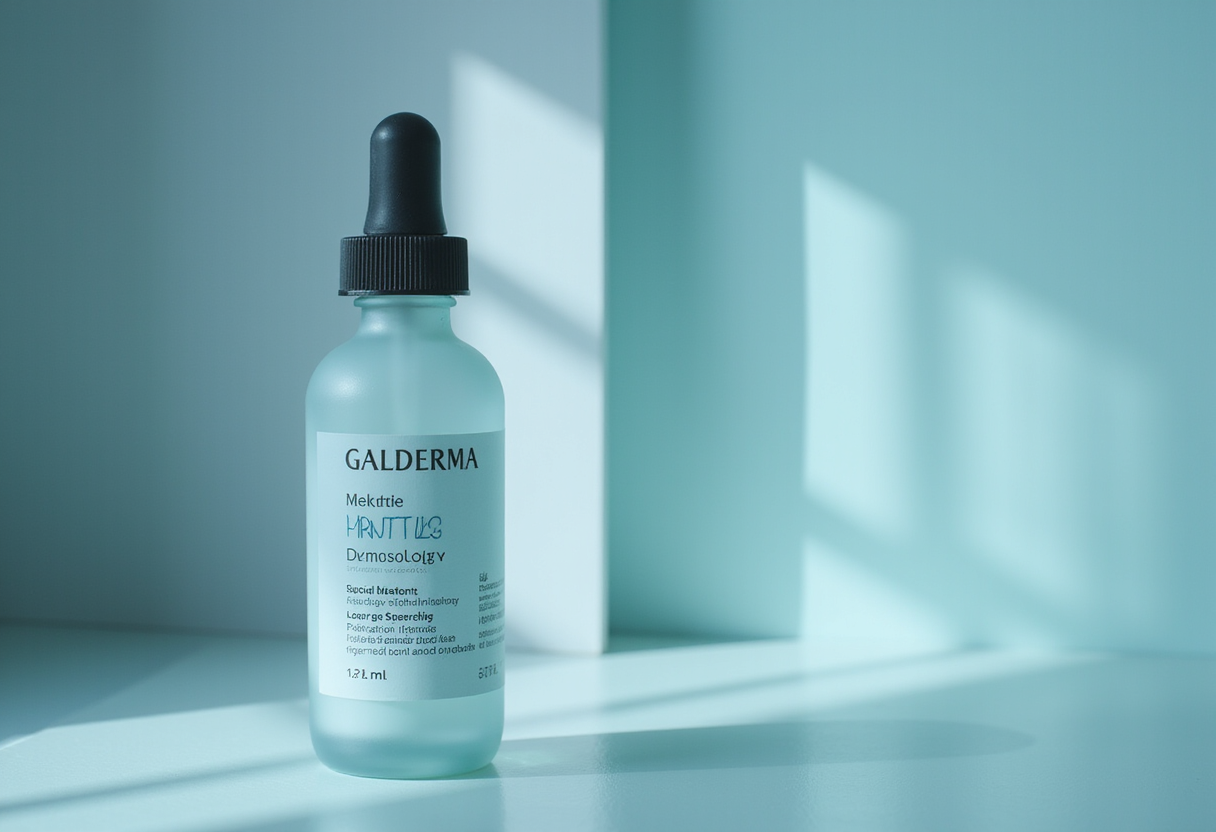
The US Food and Drug Administration has accepted Galderma's resubmitted Biologics License Application (BLA) for its investigational liquid botulinum toxin type A, advancing what would be the first ready-to-use injectable neuromodulator to reach the US market.
FDA acceptance confirms the agency considers the resubmitted dossier complete enough for substantive review. That procedural decision restarts the review clock on a formulation Galderma markets in select ex-US territories as a "liquid toxin," positioned to eliminate the manual reconstitution step clinicians perform today in every aesthetic practice injecting a neuromodulator — a workflow change that touches practice economics, dosing precision and the procurement conversation at every medical aesthetics account.
What does acceptance actually change?
A filed-but-not-yet-accepted BLA sits in procedural limbo. Acceptance triggers FDA's substantive review under the user-fee framework and resets the calendar against which an action date is set. The agency's acceptance of the Galderma filing tells sponsors, clinicians and competitors that the resubmission answered the prior review-cycle questions the agency flagged well enough to resume full review — not that approval is assured.
For the broader neuromodulator category, the filing is the most advanced attempt yet to break a market held by lyophilized powders. Four botulinum toxin type A products currently ship into US clinics, and a fifth ready-to-use entrant would reset how practices think about vial handling, inventory and pricing.
Why does the reconstitution step matter for clinics?
Existing neurotoxin products — onabotulinumtoxinA (Botox, AbbVie/Allergan Aesthetics), abobotulinumtoxinA (Dysport, Ipsen/Galderma), incobotulinumtoxinA (Xeomin, Merz) and prabotulinumtoxinA (Jeuveau, Evolus) — ship as lyophilized powder in single-dose vials. Clinicians reconstitute each vial with preservative-free saline immediately before injection, a step the manufacturer dosing and product literature treat as integral to label-adherent use.
A liquid formulation removes that step. Injectors gain back the dilution time on every appointment and the practice loses one source of preparation variability — a recurring source of clinical discussion as practitioners titrate doses across facial subunits. Medical directors running multi-provider offices also lose the variance that comes from different nursing staff handling reconstitution differently across days.
For procurement teams, a ready-to-use vial reshapes inventory handling. Practices managing temperature-mapped refrigerators drop one manipulation step per appointment. Distributors accustomed to bundling preservative-free saline alongside toxin shipments will need to recalibrate ordering, because the diluent disappears from the workflow once the liquid formulation lands.
What does the resubmission itself reveal?
Galderma has not disclosed the precise deficiency the original BLA addressed. Public communications characterize the resubmission as a complete response to the prior FDA action — language consistent with the agency having issued a Refusal to File, a Complete Response Letter, or an Information Request that materially reshaped the application. The substantive deficiency matters less to the trade than the procedural fact that the agency now considers the file reviewable.
Galderma is no stranger to the neurotoxin category. It already commercializes Dysport (abobotulinumtoxinA) in the United States through its long-standing partnership with Ipsen, giving the Swiss dermatology company established distribution infrastructure into the aesthetics channel a new liquid product could leverage on day one of any US launch.
What is the next data point to watch?
For practitioners and aesthetics business operators, the next concrete data point is the FDA's review outcome. Standard BLA review runs on a defined clock from acceptance; the agency has not publicly disclosed a target action date for the Galderma filing, and the company's stated practice is to issue a separate announcement when the action arrives.
Industry observers will also track what the eventual label carries: dosing comparisons with incumbent neuromodulators, the breadth of aesthetic versus therapeutic indications, storage and shelf-life claims and any post-marketing requirements. Those label details — rather than the approval decision itself — will determine whether the liquid formulation reshapes the practice economics of injectable aesthetics or simply adds a fifth option to an established formulary.
via Google News - Cosmetic Dermatology (Source)
More from James Calloway
Cross-references · Related articles
- Galderma Hit by FDA Complete Response Letter for RelabotulinumtoxinA
- New York City Probe Exposes Unlicensed Botox and Butt Lift 'Medspas'
- Patients Now Ask Injectors to Leave Some Wrinkles Untreated
- FDA Accepts sBLA for OnabotulinumtoxinA in Masseter Muscle Prominence
- India moves to tighten regulation of skin-enhancing treatments
End of monograph · 3 min read