BATCH-6812 · filed
AESTURA takes Korea's top dermocosmetic skincare title
AESTURA has been named Korea's top-selling dermocosmetic skincare brand, a title that crowns the Korean label as the country's medical-adjacent category leader. Underlying sales figures remain undisclosed.
By James Calloway · · 3 min read · 598 words
Composition
- AESTURA named Korea's top-selling dermocosmetic skincare brand
- Korea Biomedical Review reported the ranking
- The headline announcement does not include revenue, unit volume or year-on-year growth figures
- The Korean dermocosmetic sub-segment sits between mass-market skincare and prescription dermatology
- The ranking methodology (retail value, unit volume or channel scan) was not disclosed in the headline
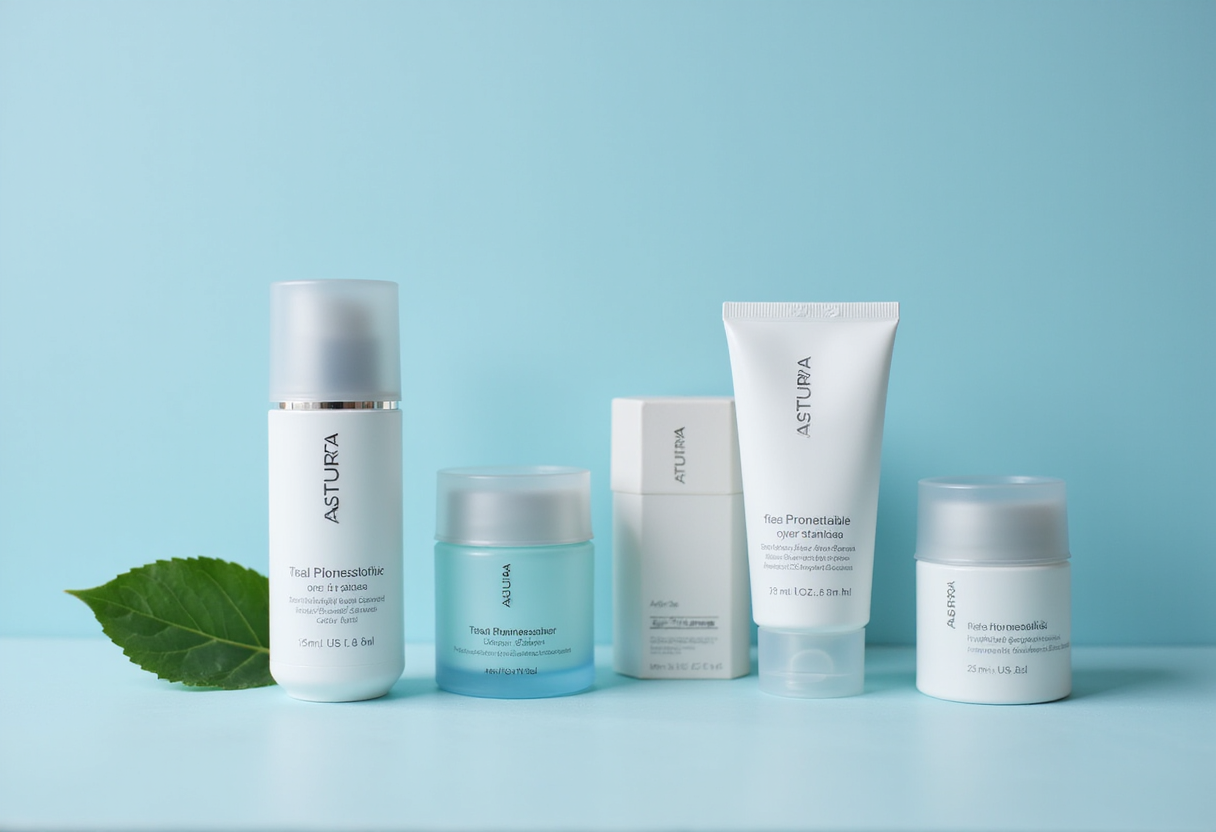
AESTURA has been named Korea's top-selling dermocosmetic skincare brand, a title reported by Korea Biomedical Review that places the Korean label at the head of the country's medical-adjacent skincare segment.
The Korea Biomedical Review announcement does not include a specific revenue figure, unit volume or year-on-year comparison in the headline; readers running category forecasts, retail allocation models or compliance benchmarking should treat the ranking as a directional signal until the underlying data appear.
What "dermocosmetic" means in Korea
Korea's dermocosmetic sub-segment sits between mass-market skincare and prescription dermatology, with formulations typically developed around dermatologist input and built on barrier-repair platforms. INCI decks in the category lean on ceramides and pseudo-ceramide analogues (ceramide NP, ceramide AP, phytosphingosine), madecassoside and asiaticoside from Centella asiatica, panthenol, allantoin, sodium hyaluronate, squalane and mild non-ionic cleansers. Preservation systems favour phenoxyethanol paired with ethylhexylglycerin over formaldehyde releasers, and fragrance loads run minimal to support atopic and sensitive-skin positioning. Finished products typically avoid denatured alcohol high in the deck and lean toward low-pH (5.0–5.5) aqueous systems, which constrains the choice of certain acidic actives and acid-stabilised preservatives.
What does the ranking mean for formulators?
- Reference benchmark: R&D teams working on ceramide and lipid-barrier formulations now have a clear Korean category leader against which to benchmark INCI decks, pH ranges and sensory profiles.
- INCI positioning: Top dermocosmetic status does not reclassify a product as a quasi-drug under Korean law; ingredient declarations, claim substantiation and the Korea Cosmetic Products Act advertising review still apply, and any claim that crosses into whitening, anti-wrinkle or UV protection pushes the SKU into functional cosmetics territory.
- Sensory constraints: Barrier-first dermocosmetic formats typically demand non-ionic emulsifiers (cetearyl olivate/sorbitan olivate, polyglyceryl esters) over anionic systems, which limits the formulator's choice of certain preservative boosters.
What does it mean for retail buyers and procurement?
- Shelf leverage: Top-seller status in Korean drugstores and dermatology clinic counters translates into negotiating weight with retailers, which typically tightens shelf pricing pressure on competing dermocosmetic SKUs.
- Channel signal: Korean dermocosmetic category leaders often anchor cross-border e-commerce flows into China, Japan and Southeast Asia; multi-brand retailers should track AESTURA's category moves as a leading indicator for regional demand.
- Treatment menus: Dermatology clinics and medi-spa operators integrating Korean dermocosmetic lines into post-procedure regimens now have a defensible top-of-category pick for barrier-repair protocols following laser, microneedling or chemical peel work.
What compliance angles should formulators track?
Korean dermocosmetic brands operate under cosmetic regulation, not pharmaceutical, even when positioned alongside prescription dermatology. That posture requires brands to keep efficacy claims within cosmetic scope, avoid drug-style indications and substantiate any functional claim (brightening, wrinkle improvement, UV protection) under the functional cosmetics review pathway, which carries a separate filing, ingredient dossier and labelling burden. A top-seller ranking amplifies the regulatory stakes: every claim on the leader's packaging faces heightened scrutiny from the Korea Pharmaceutical Association and consumer watchdogs.
What data points should the trade watch next?
Korea Biomedical Review's initial note leaves the methodology undisclosed — whether the ranking reflects retail value, unit volume, combined channel scan data or qualitative retail audit. The trade press will look for the underlying sales figure, market share percentage, year-on-year growth rate and the time window covered. Until those data points surface, formulators, retail buyers and compliance teams should treat the recognition as a directional read on Korean dermocosmetic category leadership rather than a quantified market-share claim.
via Google News - Skincare Brand Launch (Source)
More from James Calloway
Cross-references · Related articles
- K-Beauty Layered Skincare Reshapes US R&D and Compliance Load
- Kao Takes Curél into the Nordics to Drive EMEA Skincare Growth
- Korea launches task force to defend K-beauty exports against Islamic-law rules
- Kao Takes Curél into the Nordics, Extending EMEA Skincare Push
- Happi Targets PDRN Crossover from Medical Dermatology to Skincare
End of monograph · 3 min read